



Photo: Maurício de Almeida – TV Brasil
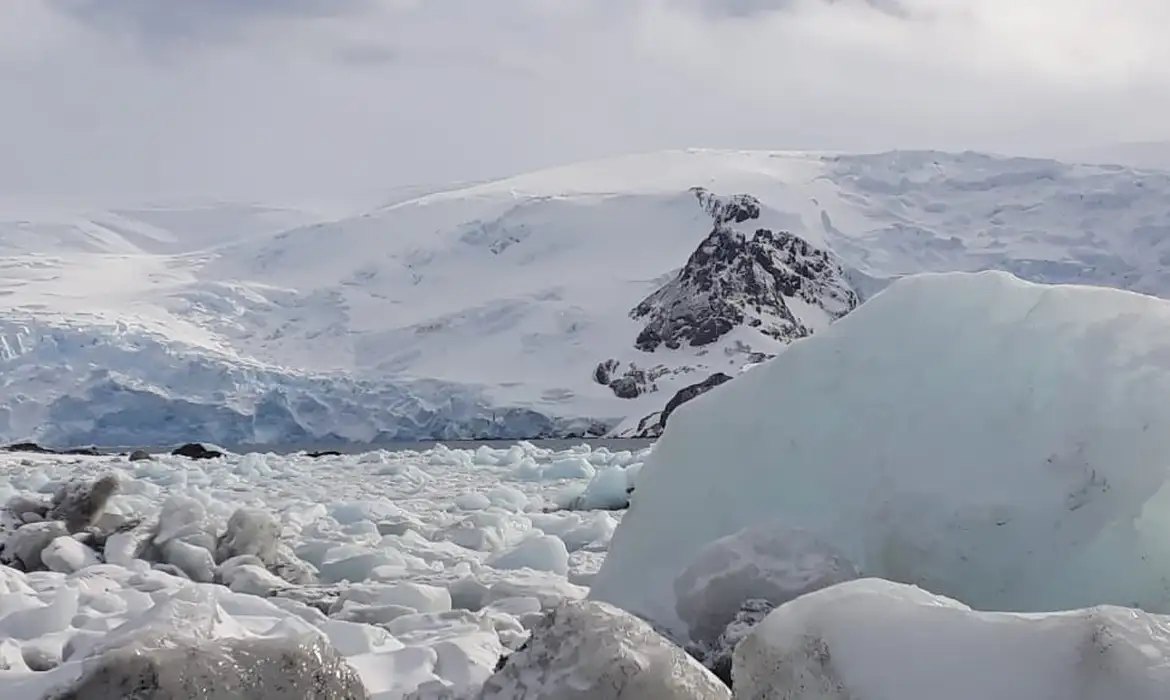
The United Nations World Water Development Report 2025 warns about the impact of global warming on the planet’s freshwater stored in mountains in the form of snow, ice, and permafrost. According to the study, approximately two billion people on the planet depend directly on mountain water for their livelihoods, but if it runs out, the entire world will be affected.
In projections about the effects of global warming on the cryosphere—regions containing frozen water—the report points to a loss of 26% to 41% of the total mass of mountain glaciers worldwide by 2100. This will have an impact on ecosystems and populations that produce food, energy, and generate economic growth from water stored in mountains.
The report also highlights the impacts of glacier melt on the hydrological cycle, which, with more variable and uncertain water flows, causes changes in climate and rainfall patterns and consequently increases the risk of flooding and landslides.
According to the publication, the loss of glacier mass between 1985 and 2014 resulted in 713 extreme weather events that generated economic losses equivalent to US$56 billion and affected more than 258 million people, leaving more than 39,000 dead.
Challenges
The report also highlights that the challenge of improving the governance of these mountain resources occurs in a context in which 2.2 billion people remain without access to drinking water and water security, and 3.5 billion people lack access to basic sanitation worldwide.
The paths outlined in the UN report suggest improvements in the collection and quality of glacier monitoring data, such as greater precision in assessing mass balance, thermal conditions, and frozen soil moisture.
“Having open and freely accessible data with integrated observation and forecasting for mountain basins is a valuable means of reducing resource gaps,” the document emphasizes.
The contributions of indigenous knowledge, women, and the most affected communities in scientific projects are highlighted in the publication as fundamental for understanding the challenges, dissemination, education, and community engagement. “Indigenous peoples have ancient connections with land and water in mountain regions, which are deeply rooted in their cultural, spiritual, and subsistence practices,” it emphasizes.
The involvement of scientific communities and the sharing of data across borders between countries are also considered key in the search for solutions for river basins that do not coincide with political boundaries, say scientists. “Managing the diversity and complexity of water resources requires contributions from a range of disciplines, stakeholders, and cross-cutting training programs,” the document warns.
Financing
The report also highlights that investments of approximately US$187 billion per year will be needed to finance adaptation in developing countries in the mountains. Currently, international financial flows account for only US$13.8 billion per year for this purpose.
According to the United Nations Educational, Scientific and Cultural Organization (UNESCO), the data gathered in the report “Mountains and Glaciers: Water Towers” serves as a basis for countries’ commitment to climate action and is aligned with the International Year for the Preservation of Glaciers. Read the content of the publication in English here.
By Agência Brasil